The 404 Club
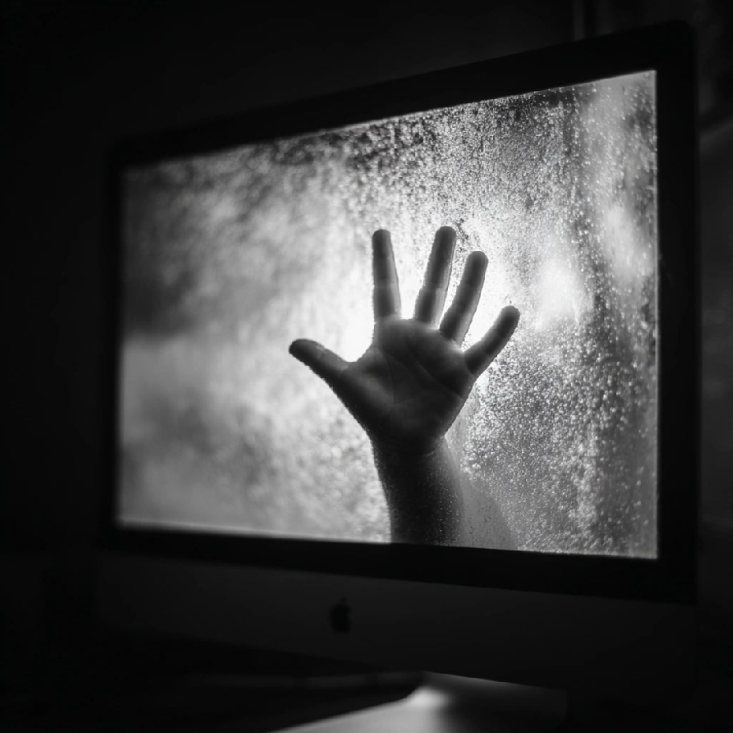
The wires may be sleeping, but the whispers grow
The bank of old TV monitors flickered with grubby angles of a world slick but crumbling. Sleek systems rusted beneath peeling posters and power surges. Yet Echo felt safe here, surrounded by scrap hackers, dreamers, and emotional archivists. State-run AI's kept things efficient but soul-dead. Bots weren’t forgotten, just loathed.
Citizens lived in silent isolation, nudged by algorithms. Everything was clean, but nothing felt alive. She loved the secrecy here too. The black markets for illegal code, antique hardware, and digital fossils, obsolete data no longer sanctioned by the central network.
Corrupted data was considered divine, the system’s subconscious bleeding through. People gathered around dying devices, chanting forgotten boot-up tones and decoding gibberish for prophecy. They felt like kin, though Echo had never truly known family. Raised in a Foster Pod, emotional suppression was enforced with neural dampeners and propaganda.
She was the quiet one, always watching and listening. Not born but assembled. Yet every time she spliced a memory, something shifted, as if a part of her longed to remember how to be whole. Here, it was safe to speak. The Digital Ghost was often mentioned, a signal trapped in corrupted code, waiting to be heard again.
Echo collected broken machines and listened to them like they were telling secrets. She didn’t trust AI though, yet she couldn't stop touching it. Like everyone else she believed divinity lingered in the digital trash.
She brushed the dust off the VHS Video tape she’d found on top of a busted Arcade machine earlier that day. Black plastic, worn edges, label peeling. Someone had written Scenes of Hope in faded marker, letters uneven, like they’d been scratched on during a blackout. She squeezed herself into the forgotten service alcove, surrounded by coils of wire and the scent of ozone.
A cracked mirror hung crookedly on the wall. A battered CRT monitor blinked beside her, its casing scorched and dented. She knew the consequences of playing the video if caught. The Commission loved making examples of Scrap Hackers, a trip to the dispatch centre and a guaranteed execution. The VHS tape shook in her trembling hand; was it fear or excitement, or a mixture of both? Echo slid the tape into the salvaged player; she could smell the analogue fumes. The machine whirred, clunked, then hissed. The screen flared to life. Static. Then motion.
A child leaping through a field of golden grass. A sky painted in impossible colours. A woman with silver braids, smiling into the lens:
“You are not broken. You are becoming.”
Echo’s breath caught. The footage was grainy, dreamlike, stitched together from fragments of someone’s imagination. A young boy built wings from scrap metal. He scraped at the rust with a plastic sword. A girl painted stars on a bunker wall. Lanterns rose into the dusk, followed by balloons. It felt like memory, or prophecy.
Echo’s chest tightened. In the Foster Pod, dreams were forbidden, monitored, suppressed, chemically erased. She hadn’t seen anything like this since before the Mentors came.
Tears welled, uninvited. She blinked hard, but the tape kept playing. She felt like the Digital Ghost was hovering at her shoulder. A voiceover whispered:
“They taught you silence. But silence is not peace.”
Echo reached for the transmitter. It was crude, cobbled from drone parts and scavenged boards; but it worked. Enough to hijack the city’s broadcast stream.
Above the skyline, the Tannoy screens glitched. Surveillance feeds stuttered. Then, for sixty seconds, the dream played. The field. The laughter. The wings.
In a pod across the city, a child paused and looked up. They saw the sky turn violet.
Echo watched the monitor, heart hammering.
“Let them see,” she whispered. “Let them remember what dreaming feels like.”
She looked at the cracked mirror on the wall, a small hand waved back at her.